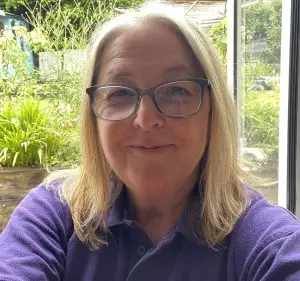
These are the questions clients ask me most often. If yours isn’t here, you’re very welcome to get in touch.
New to working with a garden designer? Start with My Process, or read my step-by-step guide, What happens when you work with a garden designer.
Working with a garden designer
Do I need a garden designer or a landscaper?
The names can be confusing, so here’s how I see it. “Garden designer” and “landscape designer” usually mean the same thing: someone who plans the garden. A landscaper builds it, and a good landscaper brings real skill to walls, paving, drainage and structures. Many landscapers also offer a design and build service, which can work well, especially if you already know what you want and would like one company to handle everything.
Where I come in is the step before the build. I start with how you want to feel in your garden and what problems you need to solve. That might mean moving the patio to where the light falls, or creating a quiet seat just for you, for half an hour’s coffee away from the bustle. Planting is at the heart of my work, and I’m thinking about the trees, shrubs and plants that will shape the space from the start. That way, you’re not relying on more hard landscaping materials than you need.
Because my design is independent, you can take it to any landscaper and compare quotes like for like. And if a design and build company would suit your garden and budget better, I’ll tell you.
What are you actually paying for when you hire a garden designer?
Apps like Pinterest are wonderful for ideas, but they show you other people’s gardens, not yours. A good landscaper is skilled at building gardens, and many offer design too, but the conversation often starts with what you’d like built rather than how you want to use the space, and planting isn’t always their main focus.
As a designer, I start with how you want to feel in your garden, then turn that into a plan made for your space: a layout that works, plants chosen to thrive in your soil and light, and measured drawings that show the hard landscaping materials and quantities. That means different landscapers can price from the same plan, so you can compare quotes like for like, and the garden gets built exactly as we planned.
The build is usually the bigger investment, and a good design protects it, so you end up with a garden you love using rather than one you’ve paid for and still don’t enjoy.
Why am I paying for a two-hour chat?
The consultation, at £150, is two hours of professional advice about your garden, not a sales visit. We’ll walk around together while I get a feel for the space, and talk through layout, planting suited to your soil and light, materials, and practical problems such as drainage, boundaries or overlooking neighbours. If you already have ideas in mind, I’ll give you an honest view of what will work, what won’t, and what’s realistic for your budget. I’ll also tell you honestly whether a full design is right for you, or whether a landscaper with my help on the planting would suit you better.
Some clients take that advice and carry it out themselves, or find a refresh of what they have is all they need. Even if you don’t go further, you’ll know what to avoid, whether that’s a patio in the wrong spot or plants that struggle because they’re not suited to where they’ve been planted, and that can save you far more than the cost of the visit.
What’s the difference between a concept design and a full garden design?
A concept design shows the big picture. It turns your brief into a practical layout, showing how the different spaces in your garden work together, with an elevation drawing and, in most cases, a 3D view to help you picture it. It’s an excellent option if you plan to develop your garden gradually, do some of the work yourself, or simply want a professional layout to guide future decisions. Think of it as a roadmap. A planting plan can be added for an additional fee.
A concept plan doesn’t include the measurements, levels, specifications or construction details a landscaper needs to price and build from. If several landscapers quote from a concept alone, each may make different assumptions about materials and construction, so prices can vary widely and be hard to compare, and some may not give a fixed quote at all.
A full garden design takes the concept further, into a detailed, scaled masterplan, with construction details for features such as walls and steps, and a full planting plan. Because every landscaper prices from the same drawings, you can compare quotes like for like, and the finished garden reflects the plan we agreed. It also includes design support during the build and a walkthrough visit about six months after planting.
Concept design starts from £1,500, and full garden design from £3,000.
What does a garden transformation typically cost?
There are two parts to a new garden: the design and the build. The consultation is £150, and design fees start from £650 for a planting design, £1,500 for a concept design and £3,000 for a full garden design, depending on the size and complexity of your garden. The build (landscaping and plants) is separate, and is usually the bigger investment.
As an example, my own garden is about 100 m². Built in 2026, the landscaping cost around £16,500, with a limestone-clad retaining wall and steps, a raised bed with a pizza oven stand, two timber pergolas, a small water feature and gravel areas. Re-laying the existing stone paving helped keep costs down. Lighting added about £1,000, and planting, including one feature tree, would cost around £2,000. Larger specimens, such as pleached evergreen trees for screening, would add to that.
For a garden twice the size, around 200 m², you might expect somewhere between £25,000 and £40,000. Where the budget falls depends mostly on the balance between soft landscaping, such as lawn and planting, and hard landscaping, such as patios, walls and steps. Soft landscaping costs much less per square metre. Complicated built features, such as curved walls, changes in level or bespoke structures, cost more, because of the skill and time needed to build them as well as the materials. The consultation gives you a realistic idea of what your own plans are likely to cost.
How long does the design process take?
A well-designed garden is worth taking time over, and a new garden usually takes longer than people expect, so planning ahead makes all the difference. Depending on my current projects and the stages they’re at, the first visit is usually within a few weeks, and at busy times up to two months. From there, the site survey, inspiration visit, mood board and design brief and concept design typically take around another two months. If you’ve chosen a full garden design, the masterplan follows once the concept is agreed, and takes one to two months depending on its complexity. I’ll give you a clearer idea at each stage.
The longest wait is often for the right landscaper. Good landscapers are frequently booked six months or more in advance, so it’s worth getting quotes as soon as your design is ready, and viewing their work if you can. That’s why autumn and winter are a good time to start thinking about your design, ready for building in spring or summer.
If you have a date in mind, such as a family celebration next summer, tell me at the consultation and we’ll plan around it. Depending on where your garden is now, a Garden Refresh (Planting Design) might make the most of what you already have in time. Or, if the build can’t happen before your event, we can dress the garden with planting and large pots chosen to move into the finished design later. Nothing is wasted.
Can I do my garden in stages?
Yes, and for many gardens it works really well, especially larger ones. The key is to plan the whole garden first using a concept design, then build it in phases, with the detailed drawings for each stage prepared when you’re ready to build it. That way, each stage fits the finished design and nothing has to be undone later. For example, we might build part of the hard landscaping and some of the planting now, and leave another area to develop when your budget allows. I’ve worked this way with clients before.
It’s worth thinking about the order. A build brings a fair bit of mess, so staging can mean living with that upheaval twice, and we’d plan it so landscapers aren’t working across areas that are already finished. Sometimes it makes sense to do the hard landscaping first and add planting later. Other times it’s better the other way round, for example planting screening trees early to give the garden structure and privacy while they grow.
If your needs are likely to change, a lighter approach might suit you better for now. With young children, a good lawn and a Garden Refresh (Planting Design) may be all you need for a few years. When the time comes for a space that works for everyone, we can start a concept or full garden design, depending on whether you’ll be working with a landscaper.
Your garden
What if I don’t know what style I like?
That’s not a problem at all. It’s exactly what the inspiration visit is for. If you’ve been saving pictures, that’s a great start. It’s your own mood board. We may touch on it at the consultation, though that visit focuses more on your garden as it is now.
At the inspiration visit, we spend around two hours looking through your saved images alongside my garden style books, working out why certain pictures catch your eye. It might be the plants themselves, the colours, how formal or relaxed the space feels, or whether the layout is symmetrical or more natural. Pictures that look completely different often have more in common than you’d think.
I then bring those threads together in your mood board, so you can see a look that feels like you and fits with your space and the style of your home, before anything is drawn up.
Will you work with plants I already have?
Absolutely, and having existing plants is a real bonus. Established trees and shrubs often give a garden great character, and keeping them helps keep your planting costs down. It’s also better for the environment. As we walk around at the consultation, we’ll talk about what you love in the garden already and what you’d happily change. I would never get rid of a plant you love, and some plants can even be divided and used elsewhere in the garden. If a plant is struggling where it is, I’ll tell you, and we can often find it a better spot.
At the inspiration visit, we’ll look at what will work well alongside your favourites. If there’s a plant with special meaning, such as a peony from your mum’s garden or a rose planted in memory of someone special or a much-loved pet, we might echo it with more peonies or plants in similar colours, so it becomes part of the new design.
Can you design a garden that’s low maintenance but still interesting?
Yes. Low maintenance doesn’t have to mean gravel and a few grasses. No garden is completely maintenance-free, but with the right design, much of the planting can look after itself. Trees, shrubs and hard-working perennials that quickly knit together will cover the soil and leave little room for weeds. Adding a layer of mulch in spring and autumn helps to keep them down.
At the consultation and inspiration visit, we’ll talk honestly about how much time you’d like to spend in the garden, and how you want it to look. If those don’t quite match, I’ll find the balance, with planting that gives you colour and interest through the seasons and cosy spots to sit and enjoy it, while the garden largely gets on with itself.
Do you ever use artificial grass?
No. It’s one of the principles I design by, and I’ve signed up to the Society of Garden and Landscape Designers’ Say No to Plastic Grass campaign. Plastic grass gives nothing back to wildlife, gets hot in the sun, sheds microplastics and eventually ends up in landfill.
If a lawn feels like too much work, or grass struggles in shade or heavy use, I’ll help you find a living alternative that’s easy to look after. That might be a smaller, better-shaped lawn, a lawn alternative such as meadow planting or chamomile, tough low-growing planting, or gravel with plants growing through it.
What if I don’t like the design?
By the time you see your concept plan, we’ll already have agreed your brief together and you’ll have signed off the mood board, so the look, materials and planting shouldn’t come as a surprise. A plan drawn from above can take a moment to picture, so at concept stage I normally include at least one 3D sketch and an elevation to help you see the space.
I’ll talk you through each area and how it links back to your brief and mood board, and I’ll listen to what you’d imagined. One round of changes is included in my fees, so we can adjust anything that doesn’t feel right. Further changes beyond that are charged at my hourly rate.
Why doesn’t my new garden look like Chelsea?
Chelsea show gardens are built to look as though they’ve been established for three to five years, and to look their best for just one week. The designers use large, mature plants, often several of the same variety packed together, and having helped on show gardens myself, I can tell you many of them never even leave their pots. Planting a home garden that way would cost several times more, and within a couple of years plants would need taking out as they outgrow the space.
I plant smaller, with room to grow, because young plants root in better and cope with our hotter summers and wetter winters. As the old gardeners’ saying goes, first year they sleep, second year they creep, third year they leap, so give it two or three summers and it will really fill out. In the meantime, a scattering of annual seeds can fill the gaps for very little cost.
About me
You’re a newer designer, so why choose you?
I’ve been designing for four years, including my training, and qualified with a Postgraduate Diploma in Garden Design with distinction. I’m a pre-registered member of the Society of Garden and Landscape Designers, and I hold the RHS Level 2 Certificate in Horticulture, which builds on a lifetime of gardening. I use that knowledge and experience to create planting plans that suit your garden, its soil and light, and the way you want to use it. I don’t have a set formula, so your garden starts with what you want to achieve and how you want to feel in it.
Twenty-five years in nursing gave me strong listening skills, the ability to stay calm under pressure, and solid project management. Because I take on a small number of projects, each one gets my full attention, with a progress update every Friday. The consultation is a good way to see whether we’re the right fit.
Can you recommend a landscaper?
Yes. I have worked with a landscaper I’d highly recommend, and through other garden designers in the area I can suggest further reputable local contractors when you’re ready to get quotes. The final choice is always yours.
If you’d like to look further, the Association of Professional Landscapers and the British Association of Landscape Industries both list vetted members by area. Local community groups on social media can be useful too, especially if neighbours share photos of work that’s been finished for a while.
Whoever you speak to, ask to see examples of similar gardens, and visit one in person if you can. Ask to speak to a previous client, check they hold public liability insurance, and confirm who will actually be on site doing the work. Because your design gives every landscaper the same drawings to price from, you can compare quotes like for like.
Do you have insurance?
Yes. I hold public liability insurance of £1 million and professional indemnity insurance of £500,000, so you’re protected both while I’m working in your garden and for the design advice I give. Your landscaper should hold their own insurance for the build, and it’s always worth asking to see their certificate.
Do you use AI, and how do you look after my details?
Yes. I use AI tools, such as Claude, to help with admin, research and drafting emails and documents, and to put together plant lists once I’ve designed your planting plan. Some of my concept illustrations are also created with AI, built on my own CAD or hand drawings, to help you picture the space. The design is always my own, and I check everything myself before it reaches you.
I only share what’s needed for each task. I use first names and your village or town only, never surnames, addresses or financial details, and I never use AI to make decisions about you. If you’d rather I didn’t use AI with any of your information, just let me know and I’ll respect that.
Which areas do you cover?
I’m based in Dodworth, near Barnsley, and regularly work with clients across South and West Yorkshire. If you’re based further afield and feel we’re a good fit, I’d be delighted to hear about your project.
Many of these topics will be talked through during your consultation, but you’re welcome to get in touch if you’d like to chat first.
Book a consultation